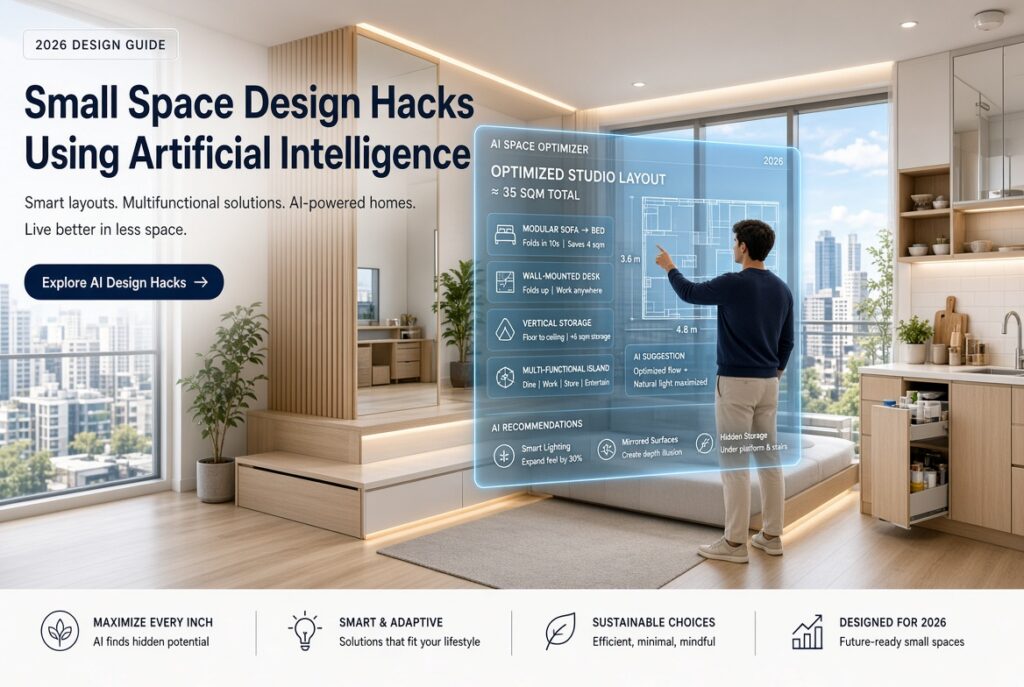
Small Space Design Hacks Using Artificial Intelligence
Living in a small space no longer means sacrificing style or comfort. In 2026, artificial intelligence has become one of the most powerful tools for maximizing every square meter. From optimizing layouts to suggesting multifunctional furniture and simulating lighting, AI helps homeowners and designers turn compact apartments, studios, and tiny homes into highly functional, beautiful living environments.
Here are the most effective small-space design hacks that AI makes possible today.
1. Intelligent Layout Optimization
Traditional floor-plan software required hours of manual work. Modern AI tools analyze room dimensions, window positions, natural light paths, and circulation routes in seconds. They then generate multiple optimized layouts that maximize usable space while maintaining flow and comfort.
Upload a photo or simple floor plan, and AI can suggest the best placement for a sofa-bed, dining area, and storage zones. Many systems even calculate clearance distances so furniture never feels cramped.
2. Multifunctional Furniture Recommendations
AI excels at matching multifunctional pieces to your exact space and lifestyle. It can recommend:
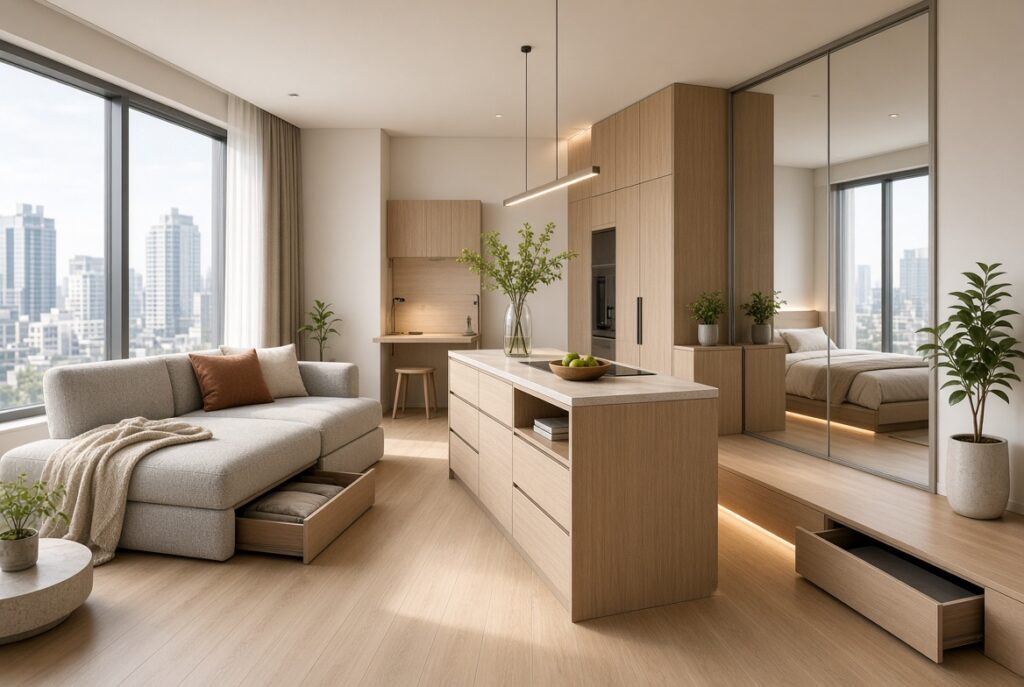
- Sofas that convert into beds with integrated storage
- Wall-mounted desks that fold away completely
- Kitchen islands that double as dining tables and workstations
- Beds with under-platform drawers or lift-up storage
Some platforms go further by checking real product dimensions against your room measurements and showing how the piece will look and function in your actual space.
3. Vertical Space and Hidden Storage Solutions
In small apartments, the walls and floors hold untapped potential. AI identifies underused vertical surfaces and suggests tall shelving, floor-to-ceiling cabinets, or mirrored storage that creates the illusion of depth. It can also propose hidden storage under raised platforms, stairs, or seating — solutions that are often overlooked in traditional design.
4. Lighting and Perception Tricks
AI analyzes natural and artificial light to recommend strategies that make a room feel larger. Common suggestions include:
- Layered lighting (ambient + task + accent)
- Strategic mirror placement to bounce light and create depth
- Light-colored or reflective materials that expand visual space
- Smart lighting systems that adjust color temperature throughout the day
These recommendations are based on the actual orientation and size of your windows, not generic advice.
5. Virtual Testing Before Buying
One of the biggest advantages of AI is the ability to test ideas without spending money. You can visualize different color schemes, furniture arrangements, and storage solutions in photorealistic renders of your real room. This reduces costly mistakes and helps you commit to the best configuration with confidence.
6. Personalized Style Without Sacrificing Function
AI can blend aesthetic preferences (minimalist, Japandi, warm modern, etc.) with strict spatial constraints. Instead of forcing a style that doesn’t fit, it adapts trends to your square footage — suggesting scaled-down versions of popular looks that still feel intentional and cohesive.
Practical Tips for Using AI in Small Spaces
- Start with accurate measurements or clear photos of your room.
- Be specific in your prompts: mention ceiling height, fixed elements (radiators, doors), and lifestyle needs (work-from-home, frequent guests, pets).
- Generate several options and compare them side by side.
- Always review AI suggestions with real-world practicality in mind — check door swings, walking paths, and storage accessibility.
- Combine AI visualizations with professional advice for complex renovations.
The Result: Living Better in Less Space
AI does not replace good design principles. It accelerates them. By handling the heavy lifting of layout calculations, product matching, and visualization, it frees you to focus on the details that make a small space feel personal and livable.
Whether you live in a 30-square-meter studio or a compact city apartment, the combination of smart technology and thoughtful design can transform limited square footage into a home that feels generous, organized, and uniquely yours.
In 2026, the smartest small-space solutions are no longer just clever furniture — they are AI-assisted decisions that help you live better with less.