
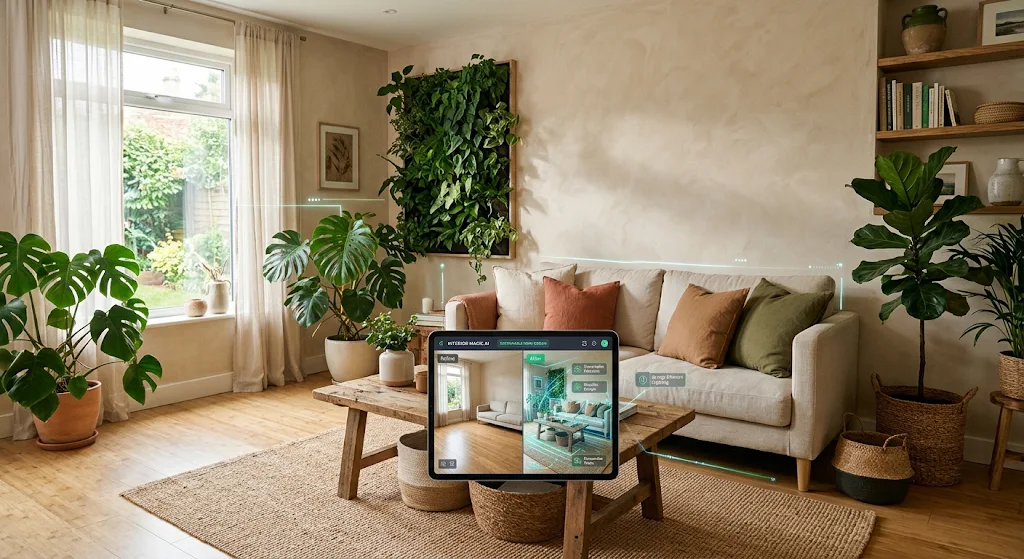
Creating a sustainable, eco-friendly home doesn’t just reduce your carbon footprint—it also lowers energy bills, improves indoor air quality, and creates a calmer, healthier living environment. However, knowing how sustainable upgrades like reclaimed wood, bamboo flooring, or biophilic layouts will actually look in your existing space can be difficult before you commit to buying materials.
With AI interior design tools like Interior Magic AI, you can preview eco-conscious makeovers in seconds. By uploading a single photo of your room, you can test sustainable materials, energy-smart layouts, and natural aesthetics before making a single purchase.
Why Use AI for Sustainable Interior Design?
One of the biggest sources of waste in home renovation is design regret—buying furniture, paint, or finishes that don’t fit the space, only to replace or discard them later. AI visualization solves this by letting you experiment risk-free:
Prevent Material Waste: Preview how sustainable materials look in your actual lighting before ordering samples or committing to renovations.
Repurpose What You Already Have: Use AI to reimagine your room around your existing furniture rather than throwing out perfectly good pieces.
Plan Energy-Smart Layouts: Test furniture arrangements that maximize natural daylight and improve airflow, reducing reliance on artificial lighting and HVAC systems.
5 Eco-Friendly Upgrades You Can Visualize with AI
Using custom prompts and design presets in Interior Magic AI, you can instantly test green interior design ideas tailored to your home:
1. Biophilic Design & Indoor Greenery
Biophilic design connects indoor spaces with nature to boost well-being and purify indoor air.
What to visualize: Living plant walls, large potted trees (like olive or fiddle-leaf fig trees), natural stone accents, and organic textures.
Sample AI Prompt: “Redesign this living room in a biophilic style with abundant indoor plants, natural sunlight, organic linen fabrics, and earthy neutral tones.”
2. Sustainable Flooring Materials
Swapping out synthetic carpets or vinyl for renewable materials completely transforms a room’s warmth and sustainability.
What to visualize: Bamboo flooring, cork tiles, FSC-certified hardwood, or reclaimed barn wood.
Sample AI Prompt: “Keep the existing furniture layout, but replace the carpet with wide-plank light bamboo flooring and a handwoven jute area rug.”
3. Reclaimed & Upcycled Furniture
Instead of buying fast-furniture made from particleboard and synthetic glues, test how vintage, thrifted, or reclaimed wood pieces anchor your room.
What to visualize: Reclaimed oak dining tables, upcycled mid-century credenzas, and rattan or wicker accent chairs.
Sample AI Prompt: “Furnish this dining area with a rustic reclaimed wood table, mismatched vintage wooden chairs, and warm minimalist pendant lighting.”
4. Non-Toxic, Earth-Toned Color Palettes
Low-VOC and zero-VOC mineral paints, limewash, and clay plasters give walls rich, breathable texture without releasing harmful chemicals into your home.
What to visualize: Soft sage greens, warm terracotta, chalky off-whites, and textured limewash accent walls.
Sample AI Prompt: “Apply a textured warm beige limewash finish to the walls, paired with minimalist wooden shelving and natural linen curtains.”
5. Maximizing Natural Light
Reducing daytime electricity use starts with optimizing how sunlight enters and reflects throughout a room.
What to visualize: Sheer organic cotton curtains instead of heavy drapes, strategically placed mirrors to bounce daylight, and light-reflecting wall finishes.
Sample AI Prompt: “Brighten this room with sheer white linen curtains, a large wall mirror opposite the window, and a light Scandinavian color palette.”
How to Test Sustainable Changes in 4 Quick Steps
Snap a Daytime Photo: Take a clear, wide-angle photo of your room during daylight hours so the AI can accurately read natural light patterns.
Upload to Interior Magic AI: Open the workspace, upload your image, and select your room type.
Set Your AI Strength: Keep the AI Strength low to medium if you want to keep your current furniture and only swap finishes (like floors, walls, and decor) for eco-friendly alternatives.
Enter a Sustainable Prompt & Generate: Type in the green materials or biophilic elements you want to see, click Generate, and use the Before/After slider to compare your sustainable makeover.
Small Changes, Big Impact
Sustainable home design doesn’t require gutting your house and starting over. Often, the most eco-friendly choice is making thoughtful, lasting updates to the space you already have. By visualizing sustainable changes with AI first, you can make smarter purchasing decisions, cut down on renovation waste, and build a healthier home with confidence.